I've been wracking my brain trying to think of what I can say that will mean anything to anyone about the current dismal, distressing state of politics in this country. And I've come to realize this: There isn't anything I can say. But there is something I can do.
My solution, based on the Chinese proverb that it's better to light a candle than to curse the darkness, is to provide daily candles in the form of links to other people's solutions, simple or complex responses to problems that they see. But as a single candle will hardly provide enough illumination to blot out the darkness that is the pettiness and meanness that characterizes this election cycle, I will light 258 candles, one each day between now and election day. In this way, I will do my part to remind each of us we are better than the baseness of the bases. Today: Most of us today take for granted that we'll be remembered by our descendants by a marker or a plaque.
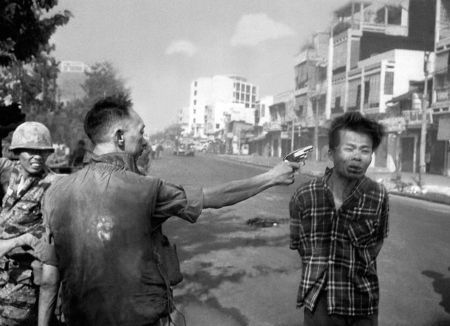
this is a video mashup for my theology and film course on which I spent last weekend working. I ought to warn you that its theme is violence and thus its imagery, much of which is devoted to films we studied in class, is violent (including a scene from m.i.a.'s "born free," on which I've written). also below is the short theological statement I wrote for it.
this is the sort of thing I do nowadays, consider the mashup of theology and reality. tonight I begin work on an essay about the mestizaje future of american religion. all this is very different from any of the scenes I ever imagined in my life over the past half century. that is a plus.
A MUSTARD SEED OF VIOLENCE A Theological Statement to Accompany A Multi Media Statement By Bob Bledsoe
Americans are less a people of violence than we are a people who love violence. Especially when it is done by or to our factotums. Like the mustard seed of Luke 13:18-19, violence “is like a mustard seed, which a man took and planted in his garden. It grew and became a tree, and the birds of the air perched in its branches.” It is this tendency toward metastasizing rather than a love for violence itself that betrays something uniquely American.
From the beginning, Americans enjoyed violence. The Great Train Robbery (1903) features a lethal gun battle at midway; similarly, D.W. Griffith’s Birth of a Nation (1915) often speeds up its plotline with war battles and gunplay, including a reenactment of Lincoln’s assassination. What may be noted about both is their lack of realism: in Train Robbery the actor who is shot throws up his hands as if in frustration and spins several times before falling; Lincoln is shot at close range from behind but there is no blood and no observable damage to the actor himself beyond his slumping. If Griffith’s take on violence is accepted, being shot in the back of the head merely leads to poor posture. This neatened violence reaches its apex in the epic but apparently harmless kung fu battle between Neo and hundreds of Agents Smith in Matrix Reloaded (2003). Spiritually more honest is the violence of movies like Kids (1995), Transamerica (2005), and Hustle and Flow (2005). The violence is short, spontaneous, and people bleed. Their violence has consequences. Whether the violence is directed outward at strangers, as in these films or allegorized against an ape in The Hunger (1983), or in the direction of loved ones, personally as in Brokeback Mountain (2005) or the representational Daughters of the Dust (1991), or in the direction of the self, as during Virgil’s nightwalk with The Brother From Another Planet (1984) or the recitation of Venus Xtraveganza’s suicidal behavior in Paris is Burning (1991), it is not inconsequential. Quotations from the Psalms and Micah suggest the same thing: violence is real and expressed not for our entertainment but against us (the video “Born Free” [2010] and American History X [1998]).
The violence need not be physical. It can be social, systemic, and endemic, against a class of people (as shown in The Soloist [2009] and Addressless [2007]). We cannot dissociate from it: the violence is in the best and the most innocent of us (for instance the children in the opening to The Wild Bunch [1969]).
Perhaps it’s more accurate to say violence in American movies are often played as a game as suggested by the girls’ dance sequence from Daughters of the Dust. Proverbs encourages us to be aware we are remembered by what we do. Violence, correctly employed, can be cathartic. The lesson of Rudy Yellowlodge in the final moments of Skins (2002) reinforces that what we do matters.
Bibliography • Addressless: Homelessness, Problems, and Solutions. [Documentary] (2007) Directed by Gino Salerno. • American History X. [Film] (1998) Directed by Tony Kaye. • Birth of a Nation. [Film] (1915) Directed by W.D. Griffith. • “Born Free.” [Video] (2010) Directed by Romain Gavras. • Brokeback Mountain. [Film] (2005). Directed by Ang Lee. • Brother From Another Planet. [Film] (1984) Directed by John Sayles. • Daughters of the Dust. [Film] (1991) Directed by Julie Dash. • Great Train Robbery. [Film] (1903) Directed by Edwin S. Porter. • Hunger. [Film] (1983) Directed by Tony Scott. • Hustle and Flow. [Film] (2005) Directed by Craig Brewer. • Kids. [Film] (1995) Directed by Larry Clark. • King of Jazz. [Film] (1930) Directed by John Murray Anderson. • Matrix Reloaded. [Film] (2003) Directed by Andy and Lana Wachowski. • New Oxford Annotated Bible with Apocrypha. NRSV. (2007) Oxford University Press. • Paris is Burning. [Documentary] (1991) Directed by Jennie Livingston. • Skins. [Film] (2002) Directed by Chris Eyre. • Soloist. [Film] (2009) Directed by Joe Wright. • Transamerica. [Film] (2005) Directed by Duncan Tucker. • Wild Bunch. [Film] (1969) Directed by Sam Peckinpaugh.
"it is a tragic commentary on our broken world that many people do not listen as carefully to the quiet voice of truth as they do to the loud noise of bombs."
--father naim stifan ateek, palestinian xian and anglican priest
I posted on MIA's "born free" video yesterday, and in return one of my students sent me a video of "udhbhawaya," a lament made by funeral in heaven, a black metal band also out of sri lanka who counter MIA's stand with the tamil tigers. as I have no dog in that fight, the one thing I want to get across is the complexity at the intersection of politics and religion and people. the video is easily as intense as MIA's, if not more so as we don't have the solace of saying "it's only a video." the images this time are not created but are as real as if you or I were at the events. as with the MIA video, it's extremely graphic.
"does MIA's genocide video go too far?" is the question asked in mary elizabeth williams' music column in yesterday's salon, and the short answer is: yes. the longer answer is: yes, thank god. I've embedded it within this post and I'm not going to give away much of the 9-minute video's plot, but I do want to warn you away from it if you aren't willing to watch uncompromisingly brutal and realistic violence. not the violence of the saw films, all gratuitous gory splash, but the quiet, personal violence of history and reality normally hidden from us.
it's powerful in all the right ways and does damage to our sense of being outside it all. the director, romain gavras, son of the immortal costa gavras, imbues "born free" (the ending minutes give us a greater sense of the irony of that title) with the closeness of active involvement. we can't pretend we aren't a part of what's going on in the rounding up of a despised social segment: we are the eyes and ears watching and participating, and if there was such technology available, we would feel the clubs in our hands and the blows on our backs.
MIA and gavras are no limosine liberals, but even if that epithet held, it can't take away from the power in watching people rounded up and dispatched. released the same week arizona passed a law I argue is a first step toward the video's reality, and in the same country that imprisons enemy combatants in a lookalike guantanamo after rounding them up in similar situations that play out in the first minutes, this is a harsh, dispiriting, ugly little movie. is it provocative? of course. is it meant to sell MIA, copies of her album, and her agenda? so what. that's the market. this is a literal personification of natalie merchant's lyrics from "candy everybody wants": "if lust and hate is the candy, if blood and love taste so sweet, then we give 'em what they want."
if you can stomach it, and not just the violence but the violent impact it will have on you, you should see it. between this video and erykah badu's recent "window seat," it seems that at least two women of color are pressing the spit beyond the flap of the envelope and as far across the table as it will last.