Showing posts with label worship. Show all posts

Monday, March 7, 2016

258 candles-day 14

I've been wracking my brain trying to think of what I can say that will mean anything to anyone about the current dismal, distressing state of politics in this country. And I've come to realize this: There isn't anything I can say. But there is something I can do.

My solution, based on the Chinese proverb that it's better to light a candle than to curse the darkness, is to provide daily candles in the form of links to other people's solutions, simple or complex responses to problems that they see. But as a single candle will hardly provide enough illumination to blot out the darkness that is the pettiness and meanness that characterizes this election cycle, I will light 258 candles, one each day between now and election day. In this way, I will do my part to remind each of us we are better than the baseness of the bases.

Today: The Safe Car Camping Program. This is a good program and I want to highlight it, but what I'd really like to draw attention to is in the related sidebar which tells about the efforts of one fellow who was driving through the middle of his town, saw a woman sleeping on the concrete and "stopped to talk to" her. My God, how often do any of us do that? 

Monday, March 23, 2015

what I do

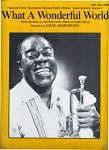
Yesterday, during service, I remembered a service a couple decades ago, in the late 90s. A woman, local high school teacher as I remember, was giving a solo as part of the service. It was the Louis Armstrong classic, "Wonderful World." And there was a guy, I think his name was Dan, who had joined her onstage but who didn't sing or play anything. He just sat on a folding chair on the other side of the stage with his hands folded, watching the performance, and enjoying it with us. After a few minutes I forgot he was there, and then was reminded as I'd see him out of the corner of my eye. He did nothing to draw attention but at the end of the song he walked over to the mic the teacher had backed away from and sang into it Louis' immortal closing,"Oh, yeah."

That, I realized, is my analogy for what I do as a hospice chaplain.

Sunday, November 9, 2014

we would experience god in the everyday

I have been reading this book for a few days, and while some of it strikes me as very weak (both in writing and in theology), some, like the following, gives me hope. As someone who is, by virtue of working as a pastor to a community of teens who are both desperate for spirit and wary of it, trying actively to achieve a new type of worship service, this is good reading whose real life application is difficult to determine.
During the last few decades, there has been no small amount of controversy in Christian churches over worship style. As those who advocated for maintaining "traditional" worship and those preferring "contemporary" forms struggled against one another, many started referring to the conflict as the "worship wars." Churches within the emerging Christian faith, however, appear to be moving beyond the worship wars. They are discovering a "third way" in worship, one that cannot easily be categorized as either traditional or contemporary...The third way very much appears to be a dismantling of the Tradition for the purpose not of abandonment but of reerecting it in a new place...[They] refer to what they do as "ancient-future worship" or "emerged worship" or "experiential worship" or "incarnational worship...

Although incarnational worship takes a very wide variety of forms, several common threads hold it together. First, it is centered on experiencing God incarnate in everyday life more than learning about God...Rather, worship leaders start with the question, "How do people experience God as Creator in everyday life" The whole world then becomes a palate from which leaders work to open people up to experiencing God as Creator in worship. The idea is not to manufacture an experience but rather to open participants to the possibility of an experience. Incarnational worship operates on the assumption that God's Spirit really is alive and well in this world and will not hesitate to stir the soul if people's hearts are open and attentive...

Second, incarnational worship tends to be mediated through a wide variety of multisensory elements, which may range from quite ancient to postmodern. Participants are as likely to experience worship through smell, taste, and physical touch as they are through sight and sound...[Prayer] and contemplative forms of Scripture reading, such as lectio divina...may be interwoven with film clips, jazz or rock music, and hands-on artistic creation.

Emphasis on the arts and artistic expression, in fact, is a third unifying element... Practitioners...feel that worship should be as artistic as it is scripturally based...[Churches] of the emerging Christian faith [may] eventually [reclaim] the church's more ancient role of supporting the arts and artistic expression...in a new way.

Finally, incarnational worship is frequently created by clusters of people rather than by single individuals or pairs. Pastors work with a worship team made up of both clergy and laity for generating ideas, creating the service, and carrying it off. In this we may be seeing the Reformation principle of the Priesthood of All Believers practiced on a larger and deeper scale than it ever has been before.

--From The Phoenix Affirmations: A New Vision for the Future of Christianity by Eric Elnes

Tuesday, December 24, 2013

the twelve holy days


A sermon given to the

Dakota Unitarian Universalist Church

Burnsville, MN

December 22, 2013

Scholars are well aware now that Jesus, who probably existed either as an individual or as a group of men and women over the first centuries of the new millenium, certainly was not born on December 25 or anywhere in December, at least not according to the New Testament’s testimony.  It would be sometime in the spring according to the gospels, which makes a good deal more sense metaphorically, Jesus as the lamb of god and bringing in the spring of Christianity and all that.  Interestingly, the First Day of Christmas in the popular song we sang earlier is not Christmas.  In most chronicles of the twelve holy days, Christmas is considered the pre-day, day zero if you will.  It’s the day for celebrating the birth of Jesus among Christians, but it’s also associated with the births of Mithras, Attis, Aion, Horus, Dionysus and the Unconquered Sun.  Mithras you may be familiar with.  The Persian god of light, his name means “Friend” and he is often synonymous with the Sun who protects man after death.  Attis or Atys is not to be confused with Attic which means having to do with Athens, but was a young man laid claim to by the hermaphroditic fertility goddess Agdistis who was so maddened by her jealousy he castrated himself in frustration and before he could cut his throat was changed by her into a pine tree.  Agdistis herself, by the way, was also made wholly female by castration.  Aion is the Germanic term of personification for the age of the universe, an eternal being itself personified.  Horus is familiar as one of the Sky Gods as well as a Sun God and is often represented as having the head of a falcon.  Dionysus, also known as Bacchus, is the god of wine and good times.  His name in Roman, Iacchus, comes from the Latin for “shout” and is thought to have originated as an epithet for the rowdy, noisy god.

            The Unconquered Sun is an interesting character because it is both a stand-in for any of the above gods as well as a euphemism for the thing itself.  The unconquered sun is what we see in the sky along about this time.  It is equally connected with the Reindeer Man, a sort of Green Man of the North, a pagan mix of Sintaklass and Odin, who appears at this time of year with the gift of deer.

            Why twelve days?  The number twelve pops up a lot of places in both Abrahamic and pagan beliefs.  Twelve apostles, twelve months of the year, twelve zodiac signs, two twelve-hour segments to a day, the twelve of the Circular Council to the Dalai Lama, the twelve members of the Arthurian Round Table, the historical Twelve Peers of France, the twelve tribes of Israel, the twelve imams in Shi’a, the twelve principle gods of the Greeks, the twelve cranial nerves in the human cerebellum, the age 12 when a Jewish girl matures and receives bat mitzvah, the twelve sons of Odin, and even the twelve function keys on my PC keyboard—F1 through F12. 

            The true first day of Christmas is Boxing Day, so-called from the British custom of giving a servant a Christmas box the day after his masters have celebrated.  It’s also associated with St. Stephen, the proto-martyr associated with horses—it’s said his body was returned to his people on the back of a horse—and with wrens.  It’s said that to kill a wren on any day other than Boxing Day is to invite bad luck.

            The second day, December 27th, is given over to Mother Night or MotherCarey or Mother Christmas.  She is the Anglicized version of the German Frau Holle or Holda or Hulda, a figure of fertility, abundance and justice.  She was often seen, originally, as a beautiful woman in white and with a golden girdle or a sash, dispensing gifts from a sleigh pulled by her dogs.  She probably physically resembled the evil character Mrs Colter played by Nicole Kidman in the film The Golden Compass, and I wouldn’t be surprised if Phillip Pullman based this character on her. 

            But far from the nasty Miss Colter, who Pullman chooses to personify the less savory aspects of Christianity, Frau Holle, whose name means “kindly one,” was a gentle goddess specializing in the care of children.  It was up to the early church to turn her to a witch who stole unbaptized children.  But at midnight on the Eve of Epiphany, it’s said that a man walking home heard voices, many voices, behind him and stepped aside in time to allow Frau Holle and her passel of children and her flowing white train to pass him, the children laughing and running beside her.  The last of the children, the smallest, kept falling behind from tripping over his nightshirt.  The man gave him his own belt to tuck the shirt into.  Frau Holle saw this and rewarded the man with a gift that his own children would forever be without want.  It is important that we recall Frau Holle or Mother Night or Mother Carey or Mother Chrismas as a mother.  She is both nurturing and kind and a shrewd judge of character and it’s for these aspects we honor her.

            Following is Day three:  the Day of Holy Innocents.  In the Middle Ages this day of Childremass was considered particularly unlucky; nothing begun on December 28th would be completed, since children have remarkably poor attention spans and tend to wander around abstractedly.  The practice for this day is an ancient one that survived until the 18th century: regularly beating children on this day.  The idea was that by mercilessly flogging and smacking children on the 28th, one would both drive out the evil spirits that had lodged there the previous year and serve as a surrogate for any deserved beatings the following year.  The practice evolved into a call for ritual, painless token beatings between children and parents, husbands and wives, masters and servants.  On this day we honor children and correspondingly honor both our wishes for what they will become and our recognition of the reality of who they are.  We also recall our lives before their arrival, although it’s probably best not to think of that before we whip them.

            The fourth day is one we might be a little familiar with.  This is the Feast of the Fools, celebrated in the Hunchback of Notre Dame and a few other novels and a MASH episode.  This is the day when the normal order of things is reversed.  Servants become masters, pupils become teachers, women behave like men, and the fools rule.  Naturally, this is my favorite day.  Parties were held, masques given, general mayhem encouraged.  It was a ritualistic method for blowing off steam, the opportunity for people who lived by the strictest restrictions to behave in the riotous, cavalier way they had foresworn in order to keep their places in the community.  At one time, this day was more celebrated and better-remembered than Christmas.  So when someone tells you that we ought to put the Christ back in Christmas, you ought to remind him to put the Fool back in Fool’s Day.

Day five is the Feast of the Boar’s Head.  On this day, two ceremonies are honored:  the Scandinavian tradition that Frey, the god of sunshine, rides across the day atop Gulli-burstin, his golden boar, whose spikes are the rays of the sun.  The second is the older, now lost, tradition in England of the boar’s head, whose meat graced the Christmas table until probably the mid Twelfth century when it disappeared, being brought in as the final remnant of the sacred meal and distributed among the revelers.  It is meet we should remember the boars, now gone in both England and here, by leaving for them a small offering to their memory, an apple or orange, in the event one is still snuffling around.

New Year’s Eve, that most festive of drinking holidays, is day six, and in many places supersedes the celebration of Christmas itself.  In Gaelic Christmas is called An Nollaig Mhor “big yule” and New Year’s Day An Nollaig Bheag “little Yule.”  And why not?  The change of year has sturdier and more aged roots than the ostensible birth of the Christ.  Still, how anyone might have guessed this day would become the night when everything switches off for one year and switches on for the next is a feat of mathematical dexterity I couldn’t begin to fathom.  Nevertheless, December 31st’s feast is known as Hogmanay and it was the day when the Druid priests cut the sacred mistletoe and distributed sprigs among the people.  Hogmanay itself is a corruption of the French term au gui menez “lead [us] to the mistletoe,” and in some parts of France children still celebrate the day with a race during which they cry, “Au guy l’an neuf, au guy Gaulois” “to the mistletoe, to the French mistletoe.”

This is the day when we take care of the things we have missed taking care of throughout the year.  The trash is taken out and fresh sheets placed on the beds.  Socks are darned and brass and silver shined.  Pictures are hung straight.  This is the day for Reclaiming Unfinished Business, clearing up all those things we neglected the rest of the year.  Everyone experiences a new beginning, a new clearing of the old.  After sunset, juniper branches and fresh water were brought into the house.  The branches were dried out overnight, and in the morning the head of house drank the first sips from the water and sprinkled everyone else with some.  Then the dried juniper was lit, the doors and windows latched, and the house was fumigated with the burning branch.  This ensured the gifts of the new year were appreciated appropriately.  The new year’s blessing was brought by the first person to cross the threshold to visit, called “first footing.”  All the lights were put out except for a single candle, and then that first visitor must step outside, protecting the candle from the elements.  At the stroke of twelve, he reenters, is given a mug of eggnog, and sets about relighting all the candles and lanterns of the house, blessing the house with new light.  Often that person also gives a handsel, a gift of coal or whiskey to make the blessings concrete.

Day seven of course everyone sleeps in.  This is the Kalends of the new year, the hopefulness of the new day.  The old year is now officially dead and while we may not immediately see any benefits yet to the new, there is always a reason to be thankful, even if it is our ability to have made it through another year.  In contrast to New Year’s Eve day, nothing is taken out of the house this day—trash, bones, excrement, they are all left inside until the next day, to ensure blessings of the first footing do not escape. 

One of the nostalgic traditions we think of as Christmas in origin is caroling, but this is actually done on the Seventh Day and is referred to as Wassailing.  Wassail is a heated, alcoholic apple cider and is meant to be shared with the trees of the orchard as well as with the visitors who sing.  Robins are the guardians of apple trees and it was them that the wassail was intended to provoke, cake pieces and bread pieces soaked in the wassail being stuck to branches to reward them for their past year of faithful service.  On this bleak day it is beneficent to intone, “The luck of the year, it is the bird-quiet hour, the midday contemplation of the sun.  On this bleak day, when no sun shines, what wraps the birds in silence, what power blankets their song?”  It’s the day of prophesying and divination—weather divination especially, as you can imagine from a people reliant on weather for their well-being, and one saying from Scotland runs, “Wind from the west, fish and bread; wind from the north, cold and flaying; wind from the east, snow on the hills; wind from the south, fruit on trees”—and the first day’s water drawn from the well is considered especially blessed and called the flower of the well. 

The Eighth Day is the day for sitting inside to contemplate and reflect on snow.  It’s imperative that we remain on snow’s good side, since to be in opposition to snow is to be in opposition to winter and that’s simply a waste of energy.  We pay our respects to snow on this day, for its cancelling out the darkness at midwinter and its transformation of even the bleakest spaces into places of wonder and enchantment. 

The Cherokee have a story about the Ninth day, which is devoted to evergreens.  The Druids of course revered the oak and during Kalends yew and juniper play a major role.  In the middle ages there was a well-known play about the Paradise Tree, a descendant of the original Tree of Knowledge, which Adam smuggled out of Eden and planted in the outer world, where it grew to huge proportions and provided the wood for the cross on which Christ was crucified. 

Back to the Cherokee.  When the Great Mystery created all the trees and plants she wanted to give something to all of them.  But she couldn’t decide among them who best deserved it, so she proposed a contest.  Whoever could keep watch for seven days and seven nights would receive the gift.  All the trees were atwitter to be given such an important duty and had no problems remaining awake the first night.  But on the second night they found it hard to stay awake, and the flowers were the first to fall asleep.  By the third night, the birch and grasses were drooped, and by the fourth night the elms were snoring.  On the fifth and sixth nights, the maples and even the oaks had drifted off, until, by the eighth morning only a few—the pine, the cedar, the spruce and fir and holly and laurel—were still awake and watchful.  “What great endurance you have!” cried out the Great Mystery, and so she gave them the gift:  they would remain green forever and keep guard throughout the winter while all the others sleep.  The evergreens, this story says, are always awake.  And always watching. 

            Day Ten is interesting because it is two different days for men and women.  For both it was the day when each had to return to the drudgery of work after the luxurious time off afforded by the festivities of midwinter.  In the case of women who in these preindustrialized times were often employed as weavers and spinners, it was known as St. Distaff‘s Day, while for the men who were also expected to return to work, it was known as Plough Monday.  Whether the day itself fell on a Monday or not wasn’t important, it was simply another Monday in their eyes.  This became the excuse for another day of celebration as mummers, the bemasked players who appeared throughout the year at festivals and feasts, now sped through town blessing the ploughs and spindles.  Today Plough Monday has been given its own day in England, January 8, separate from the twelve holy days, but it’s thought to originate in another ancient Roman celebration, Compitaline.  In this ritual a small shrine was built where four estates met to the four directions, with a miniature plough and wooden doll set on each alter, and then the first earth-breaking of the new year was done on each property. Until now we are living in Liminal Time, the threshold between extraordinary and ordinary events that for pagans began in late October or early November with Samhain. With St. Distaff’s Day we begin a return to normalcy, what Christianity calls Ordinary Time. 

            The Eleventh day of Christmas, January 5, is the Eve of Epiphany and the Festivalof the Three Kings.  This day is given over to the Magi whose journey is often a microcosm of the journey we ourselves make spiritually.  Consider, they were themselves seekers after something and doing what felt right to them to do, going where their inner compass told them to go, and for so many of us, here today in this church, we have traveled so far and so wide only on the basis of our own compasses, be they in our hearts or our heads.  As the Magi found what they sought in the form of a child, may you find what you seek here. 

            This is the day to consider too the gifts that so often become the major focus of these holy days, forgetting as we do that we are ourselves the recipients of a gift.  I quote now from JohnMatthews: 

At a time when the commercial Christmas has a tendency to swamp the sacredness of the season, we ask and are being asked, ‘What do you want this year?’  There are certainly things we would quite like, things that we hope will be brought for us, but these are not the same as our wants.  True wants are not small things satisfied by prettily wrapped parcels:  they are the immense needs of inner space that can be overwhelmed by all our little wants and yearnings.  To consider our real needs—the things we lack in our lives—is often too frightening, opening up an abyss of need that calls our very existence into question.

Our real wants eat holes in us:  never resting, never loving, never greeting, never finding, never seeking, never being satisfied deep down.  These ravenous wants define our treasures…they create a Christmas list that no store could supply:  time to stop and really enjoy, in a space of quietness and contentment all the things we were put on earth to do.

Space to give and receive love reciprocally.  The grace to seek and find our spiritual joy.  Freedom from the tyranny and burden of other’s expectations, of what others think.  Acceptance of ourselves as we truly are.

            This then is the gift afforded us on the twelfth day.  Epiphany.  It means manifestation, making an appearance, and refers theologically to the appearance of Christ to the Three Kings.  But it’s a lot more than that.  In literature James Joyce gave us another meaning in an early draft of what would become Portrait of the Artist as a Young Man.  He describes it as a sudden insight, an instant when reality shines through an ordinary object, when “its soul, its whatness, leaps to us from the vestment of its appearance.”  It’s the appearance of what we need.  Perhaps not what we want, because that’s always going to be something good, something we like, and our epiphany is more likely to be something we haven’t considered and don’t want and, god help us, we don’t like.  For me, epiphany is often the realization that the shift from dark to light carries with it a responsibility not to continue hunkering in but, like a bear or a vole, to start the stirring for the reawakening I undergo each spring.  For you it might be a recognition that you’ve had all your needs met and now it’s time to meet them for other people.  For others it may be exactly the opposite:  it’s time to consider yourself a while rather than others.  There’s no one size fits all when it comes to epiphany.  It can come in any number of ways:  in someone’s smile, in the smell of woodsmoke where we thought there were no houses, in the sudden, unexpected taste of a good wine, in the sound of voices where we expected to be alone, in the touch of flesh on flesh that reminds us we are with one another.  These tiny moments bring us out of ourselves and into the wider world. 

            Like anything artistic, epiphany can be ruined by over definition.  Let’s take a minute of silence to reflect on what we have been given. 


Saturday, November 23, 2013

enlightenment is dog piss

"Being a community" is thinking small. Our ultimate goals and purpose cannot simply be about ourselves. Unitarian Universalists, like members of every other religion, are trying to change the world by encouraging people to live a different way. By word and by deed, Unitarian Universalists are trying to change people. It is time for us to acknowledge and proclaim this, and to see that building a religious community is but a means to that larger end...
What I am talking about is related to the "missional" trend in Unitarian Universalism, in which people are committing themselves to living out our values in real, embodied, particular ways in specific communities, "to love the hell out of the world"...Our purpose is to cultivate people who can feel such passion...
The contemporary understanding of Unitarian Universalism is in truth a utopian and demanding vision of community: we are trying to gather not the community that is, but the community that ought to be...The religious community to be built...[is] one that deliberately includes the formerly excluded. Our goal became to build on the experience of...people who...realized that they could be themselves in this church. It followed that everyone should have that experience: the historically marginalized and oppressed, the disabled, the mentally ill, the chemically sensitive. Even those on the margins of traditional religious community--the children--are to be brought to the center...
Inclusion has been our goal. But inclusion is about "bringing in." We should now be thinking about "going out." Now we should turn ourselves inside out to turn the world upside down.
--From "Religious Community is Not Enough" by Tom Schade in the Winter 2013 issue of UUWorld

We must turn ourselves inside out to turn the world upside down. That is, and should be, a frightening proposition. I know I'm scared. I'm scared shitless of it. I've been turning inside out the past two years (at least) and all it's brought me thus far is depression and frustration. Sometimes I see Something, Something That Is I miss and most people miss, and it's a great moment. And then the crushing reality of How Things Are--the need to make money just to live, the fact that I'm in my 50s and my time left on the earth is finite and growing smaller by the minute, and the overwhelming  effort of work like that (and the fact that it pays no money)--overtakes it and leaves me eating ice cream in the middle of the night because I need to get numb and I don't want to get drunk.

But I keep returning to it, I keep turning myself inside out because I know that it's work worth doing, maybe the only work worth doing. The Real Work Gary Snyder called it. It's tough to admit to myself I want to turn the world upside down. I don't want to rock the boat. I want people to like me. I ought to just keep my head down and get along, I got my own shit to worry about. Paying the mortgage, keeping the house warm in the winter, getting the smell of dog piss out of the carpet. There's nothing more crushing when I'm trying to meditate and get myself together than the ripe, fishy reek of dog piss.

But when I'm honest with myself that's what I want to do. Turn the world upside down. At least one small part of it, the part I'm in contact with. It's a tiny, tiny part but the recognition I came to yesterday was that working at the microcosmic level is where the real action's at. It's where real change can occur. I haven't a clue how or what the change looks like. But change is needed and it's already begun with me. And that's horrible because what it does is open my eyes to injustice and wrong all around me and know there's a better way to be. When I was in Montreal in sesshin I spoke with the abbot one day and said, "I think I've made it, I've become enlightened." And he appraised me and looked really sad and said, "I'm so sorry."

That's where the depression and frustration and anger come from, this open-eyed, frank regard of the world as it is and how it ought to be and how wide the margins between those posts are. And how much work that is and how little time I have left and how can I find meaningful work that pays me enough to help us live on and GODDAMMIT! I can still smell dog piss.

In my best moments I know that smell of dog piss keeps me grounded but it also distracts me. My frank admission is that I know I have gifts and the urge to share them and I know how--or at least imagine some of the ways--but I'm either too timid or cowardly or caught up in my own shit to take whatever the next step may be. Some days I imagine the next step is to bake bread and take it to places where the homeless gather and share it. Some days it's to just sit down in the sun and meditate.
Some days it's to visit friends. The issue becomes recognizing all those things and not acting on any of them because it's a lot easier to surf websites while waiting for the vinegar I've soaked into the carpet to work. Turning myself inside out has led me to falling into a First World Problem: I've got the shits and I'm faced with two dozen different remedies. I know better than to think someone will come along and say, "This one," or to think that's what I want. But the varying claims and prices and dosages keep me occupied until suddenly I have to go again. I waddle off to the public toilet thinking, "Next time I'll pick one."

Saturday, June 22, 2013

"fuck that shit"

A post on a friend's Facebook page has given me pause to think since last night.  It's not that she wrote something with which I disagree or that is offensive, but the situation she describes, and the comment I made about it, has gotten under the thin skein of fluid housing my cerebellum.

She is a Unitarian Universalist minister on a flight to Kentucky where our faith's General Assembly is being held this week, and she noted that, shortly after takeoff, she was belted in and two men seated behind her started talking and dropping f-bombs one after the other.  She said she ended up huffing and grimacing like the Church Lady in hopes they would stop.

Several friends chimed in with suggestions about the rudeness of their remarks and ideas for her to turn the responsibility back onto them to end their constant "fuck" repetition.  My favorite was one friend's suggestion that she out-"fuck" them:  "Fuck!  Someone already fucking did the fucking crossword in the fucking in-fucking-flight magazine.  Hey, you fucking guys got a fucking magazine that isn't fucking filled-in?" turning around while wearing her collar.

My comment, after some reflection:  "Think on this:  this is the way American men talk today.  If we're going to be a viable faith in the future we need to speak their language."

Now I have admittedly made some major assumptions, among them that these were young, white men who either don't have children or who are luxuriating in their freedom away from family.  Young men, especially young men without children, are disappearing from congregations, if they ever appear there. But perhaps my greatest assumption, and one I'm loathe to give up, is that Unitarian Universalism or any liberal religion, has anything to say they would want to hear.

This isn't another post about the decline of congregations.  This is one about the concern I have that, in becoming something that so many of us are surprised we became--religious people, spiritual people, people of faith--we have either lost a sense of why it was that we avoided organized religion or we have gained an appreciation of what our younger, coarser selves would have scoffed at.

My friend's reaction is telling, because I know she is someone she is surprised she's become.  That she would have a Church Lady reaction or recognize in herself that she's embarrassed to admit having that reaction comes from her younger, wilder, less-ministerial years.  And many of us have that:  I think I am more astonished at the role I've taken on than a lot of my friends from earlier in my life (funny how others seem to see what we ourselves may have refused to) and do my best to counter the stereotype of who I am now with reactions I think my 25 years-ago-self would approve of.  When someone on finding out I'm a minister half-jokingly suggests he'd better watch his language around me my automatic response is, "Fuck that shit."

And while that's always good for a laugh, and as shorthand for where I stand and what I stand for, it says something too about who I can talk with.  As my friends and students know, my conversation is peppered with a lot of gratuitous swearing.  I love to swear.  It's both a release and a signal that I am not afraid of saying something offensive.  Sometimes I think it has led to my being passed over for promotion or positions, especially when I reference conversations with students, particularly convicts, and repeat them verbatim.

I'm pretty certain it isn't just me who likes to swear.  I hear a lot of people doing so in casual conversation, on their cell phones, in talking with their kids and friends, and sometimes in expressing anger or surprise.  It's like a freedom our society has granted us, and whether that's good or not I can't say.  But I think I can guarantee it's not going away.

By the same token, while we don't like to hear profanity in our churches and temples and mosques, it's coming there too.  It has to.  It's a nature of the beast.  I don't mean to suggest we should swear in our sermons, although I've been known to draw a mighty fine line, but conversations at least are becoming less formal and that's reflective of what our places of faith are becoming.  The same idea is reflected in our informality in dress:  at least in the congregations I attend, there are very few people dressed in what used to be called their Sunday Best.  And while there aren't many who are coming in sweatsuits, that line is also being touched on.

This greater informality of peoples' speech and dress is the future.  They will raise their families in our congregations if we give them reason to attend, and for that to happen we will have to let them talk the way they talk and be able to respond appropriately.

Thursday, November 3, 2011

worship service mashup

this is a mashup I made both for a teaching presentation for my xian education class and for next monday's CPE worship service. by that time we'll have reached the midpoint in our experience (which ends mid-january). what I wanted to get across was the sense that this is tough but it's an effort we, and our future congregants, will be the better for.

Friday, April 8, 2011

common as mud


I was asked to lead worship for my internship class by presenting a mashup I'd done previously, but I decided at the last minute yesterday that as I had a few hours free I would make an entirely new one focused on the topic for last night's discussion about the difficulties of being a leader during change.


the mashup needed to be about 10 minutes and I had completed the first half by the time I left inver hills for the afternoon, expecting to complete it at united seminary. unfortunately, the wireless system there is always in a state of flux and I was unable to access the internet for new images (I had already uploaded the clip from do the right thing that morning since I knew I would use it), and as a result I was left using a few images and final video already saved to my hard drive. still, I am very happy with the result. not bad for an eleventh hour puttogether whose message was essentially created on the spot.


I want to speak for a moment to the photo of bill and hillary clinton dancing. the emphasis on his muffintop and her cellulite suggest to me that it was not intended to be a flattering picture, but it strikes me as exactly right in its composition and in the attitudes on their faces that these are 2 people who love and respect 1 another and so are a good example of a pair of leaders in the midst of great change. as with mlk, their flaws make them identifiable. leaders involved in great change are seldom plaster saints.

Monday, December 27, 2010

take confidence in gratitude-4


the finale of my day-after-xmas video sermon. it was a good experiment but I learned there are non-technological elements that also need to be considered, such as against what is such a sermon being projected (a white wall that bright sunlight reflects against is not a good choice), as well as how enlarging a video clip can slow it down considerably so dancers look like they have st. vitus.


Sunday, December 26, 2010

take confidence in gratitude-3


part 3 of today's day-after-xmas multimedia presentation (that went over very well, thank you: attendance was always down, I was told, on the service after xmas, so there were "only" 50 or so people; but when I preach out on the rim I would kill for an attendance of 50, so I'm not complaining).

Friday, December 24, 2010

take confidence in gratitude-1


I'm in charge of the sunday-after-xmas service at one of the churches where I'm interning, and as I'm told it's a traditionally less-attended service, I decided to try some technological experimentation. in this instance, doing a 20 minute multimedia presentation rather than the traditional sermon. I've been working at it for several weeks and kept running into the same difficulty: too large to keep track of and something somewhere ended up unravelling. finally I've just sliced it into fourths and and publishing them here as 4 separate videos over the next 4 days.
(if I need to mention it: the photograph is not a spiritual comment, but I used it in the course of the work and I really, really like the blissful look on her face.)

Friday, November 19, 2010

duuc-blind


this is a follow-up written for my class in uu worship to my previous post about my impromptu dia de los muertos ceremony from late october. most people may find it uninteresting but it's a good example of the sort of self-contextualizing reflection you're expected to do in seminary, and as such is a peek into the mindset of a minister-in-training. the difference is that, as a uu, what would be for others a theological reflection becomes in our hands more a behind-the-scenes examination of intent in developing such a service.


DUUC-BLIND


Dakota UU Church in Burnsville, one of the two congregations where I’m interning, does not have an order of service. Actually, it does in the sense that it has a single order of service used for every service. The church is small—its membership is in the low 20s—and often relies on visiting speakers to provide nearly every element of a service. Any visiting speaker is automatically accorded authority by virtue of his having been asked to appear. There is a printed pamphlet available on entering although the members have its order memorized. It tells the history of the congregation, the composition of the church board and its current membership, has the congregation’s website URL, and includes a brief outline their worship services follow:

Welcome
Announcements
Chalice Lighting
Hymn
Joys and Concerns
Offering
Presentation
Hymn
Extinguishing the Chalice

A given Sunday’s speaker can mix up the order, add to it or subtract from it as she wishes. Nothing in the service is written on stone. Even joys and concerns, both the life’s blood and bane of many congregations, is an optional element left to the caprices of today’s speaker. The hymns often depend on what Chuck, the congregation’s most musical member, feels like singing that day and whether he can find a CD with an accompanying instrumental: there is no organ or any other instrument kept in the building (although once a month there is a Saturday night drumming circle).

I’ve got a history with this congregation, having been a guest speaker when the congregation was larger, and now that I’m their minister on a once-a-month basis, I’m developing their service beyond the outline into a more experiential, less sermon-centered experience. For my October 31st service I prepared a combination extemporaneous lecture and ceremony-creation for which Bruce, the congregation’s chair, welcomed everyone and introduced me. Then I led an a capella version of McDade’s “Spirit of Life,” a reading from Singing the Living Tradition, my ceremony, an opportunity for reflections, a second singing of “Spirit of Life,” and a benediction. This is my outline:

EL DIA DE LOS MUERTOS RITUAL
Performed at Dakota UU, Burnsville, MN
October 31, 2010
• Music (“L’Autunno” by Vivaldi)
• Light herbs
• Introduction to Dia de los Muertos
o Halloween
o All Saint’s Day
o All Soul’s Day
o Samhain
o Yom Kippur
o Thanksgiving
• Introduction to altars
o Rich
o “I have no altars”
• Introduction to altar objects
o My mother
o My animals
o Who I was
• Poem (“My November Guest” by Frost)
• Guided meditation
• Shared smudging / “You are Loved”
• Responses/Sharing

In order of use, the resources were: a smudge stick and a bowl to collect ashes in; copies of Singing the Living Tradition; a CD of Vivaldi’s Four Seasons whose “L’Autunno” was played softly during the ceremony; various referential objects from my home that I placed on the worship table in a makeshift shrine; and the Collected Poems of Robert Frost.
I think one of the sources of tension involved in every service at DUUC is the uncertainty whether a given service will work or not, and I don’t think this willed blindness to a service’s workability is an unwelcome aspect for this congregation: I think the members have become so accustomed to the hit-or-miss-ness of guest speakers that they’re no longer anxious about an individual service. Indeed, I’ve often heard members joke that a successful service is one in which the guest shows up. In the case of my Dia de los Muertos ceremony, I wanted tension to build throughout the service to crest during Shared Smudging (which was exactly like my recent class water-sharing ritual except using ashes) and then allowed to remain level, dipping a little during shared reflections but remaining relatively high, so attendees left the service more invigorated than they’d entered.

The focus began outwardly, beginning with the welcome, and then gradually became more inward as the ceremony progressed, culminating in each congregant concentrating on himself during the guided meditation, accepting another person’s attention when receiving the smudged affirmation, and then refocusing his attention onto his neighbor while passing the bowl and affirmation. I wanted congregants to receive the affirmation as a declaration and to pass it as an invitation.

Tuesday, October 5, 2010

woodstock altar


in the late 80s I lived in my car while working at sunflower health food store in woodstock (yes, that woodstock), but I went inside when winter came. I took up an offer by my friend rich to live in the upstairs rooms he never used of the house he rented about 4 miles out of town, from which I'd commute by riding my bike or walking.

rich was tall and gawky, skinny as the most stereotypical vegan, with long, frizzy hair that trailed midway down his back in a single solid braid. he wore thick glasses and spoke in a thin falsetto that sounded fake when you first heard it, but soon you'd realize that really was his speaking voice. he'd lived for a years alone on the first floor of an old farmhouse located at the end of a short road on which the only other house was that of his landlord, a retired bachelor farmer who'd built his own home there himself over the course of decades. when I was eventually asked to leave 6 months later--at this period of my life I never chose to leave someplace, I was always asked--it was because the farmer observed that since I'd moved in there'd been a decided pickup of people visiting and driving that lonely road that had only known his own and rich's cars. (this was true: many people came to visit me there, but generally only one at a time. rachayl my orthodox sabra actually lived with me in those rooms for about 2 months, although she didn't have her own car).

rich had created what probably began as a small memorial but had grown over the years into a huge shrine to a woman he had dated for a short time before she died from leukemia. it was on the first floor: the whole floor was one large room and where he slept (and where the shrine was located) was adjacent to the entrance to the kitchen, so it wasn't unusual to pass the shrine 3 or 4 times a day. rich had darkened the whole first floor by tacking blankets over the doors and windows and the shrine was lit by candles and little electric lights. it was kind of creepy: there were pictures of the 2 of them together, of course, and her journal and books that had been important to her; there were locks of her hair which is somewhat cresting the creepy zone; but there were also things like unused tampax that had been in her purse when she was ill and a dirty fork from the last meal they ate out together (everything was labeled [!]). when I saw rich last about 12 years ago he had married and moved. I did not ask if his wife had allowed the shrine to travel with them.

for years I've taken rich's obsession as unusual and unhealthy, but it may be that with age comes wisdom or it may be that with distance comes acceptance of some kind, but I think I have found in my reading of woodruff some way to touch on rich's shrine in a respectful way. woodruff quotes approvingly of oliver wendell holmes' poem "the chambered nautilus" in relation to reverence and the home and says of it:

"a shellfish hangs no pictures on its walls, and we cannot imagine a mollusk standing in reverent awe of the wholeness that families seek when they make a home. still, the image of the nautilus is powerful. the chambers grow smoothly, each out of the smaller one that is left behind, and the whole history of the animal is carried in the shining spiral of its home. the things we do to make a home out of a shelter may form a linked succession as we outgrow our old quarters and stretch into new ones. in this image, there is nothing confining about home; it is not a prison or a cage...home is a place to expand, or to expand in, and to expand smoothly..."

rich was alone, at least partly by choice, and I suspect that even married he has remained in some senses alone. to hear him talk of this woman was to hear him talk as if she'd been his soul mate, cruelly taken from him, and maybe that's the way he sees it. but I think in constructing that ever-accumulating shrine he was trying to build a shelter for the way he thought he should navigate the world: connected, a mixture of the profound and the trivial, encompassing every act of life and unafraid of proclaiming the personal as, if not political, then public.

Sunday, May 16, 2010

ascension day in erin prairie


for several years I've passed a little catholic church out in the boonies of erin prairie, wisconsin, on my way to new richmond and decided that today I'd attend mass there. I arrived early, hoping to find a seat near a window so I could look out at the surrounding expanse. erin prairie is pretty out there, even for being on the rim, and the church is set in the middle of fields where the wind blows desolately, and from the hill the church is on you could be looking out at nebraska, circa 1940. but all the windows were ornamented and let in beautiful spoltches of colored light that played along the rows of parishioners, but let nothing, not even furtive gazes, out.


I thought at first that these folk might give the unitarians a run for showing up after service began, but almost all of them walked in between 10:55 and 10:58. a veritable wash of people. many of the older men looked like retired or still practicing farmers, all swinging gaits and sunburned faces that end abruptly where the brim of a seed cap would start, which is what I expected. but there were also more middle-aged and younger people and most of them looked like middle management or insurance agents. in the end, about 125 adults were settled in the pews and the opening commenter made a reference to the church "looking empty" because of fishing opener.


jann, my worship teacher, often talked about worshipping in "liminal time," and how this was accomplished by making no reference to what day it was or what time of day, setting up the time outside time for worship. but every speaker at st. patrick's said "good morning" at the start of his or her function, including the priest. there were great swatches of silence between songs and elements, but they were intentional silences interrupted consistently by the sound of children. they certainly suffer the little children--not a minute went by without at least one and often three and four kids called out inappropriately to a parent or another kid. I often had to strain to hear the speakers even though they were amplified and it looked as if others had that issue too. hand-made celtic rosaries were distributed to the first communicants and I found myself coveting them: they looked simultaneously fragile and chunky, like spun sugar necklaces.


the reader, who read as if he'd never seen the text before, nonetheless sat confidently and calmly in his pew between his functions, his arm affectionately around a woman who was probably his wife, and another woman rocked her child to each hymn. these were homely, gentle scenes that comforted me. the thesis statement of the priest's ten minute sermon focusing on this feast day of the ascension was "jesus will not leave us alone," and in my serenity, smelling no incense but old timber and dust, I could believe it. even the happy-clappy singsong of the lord's prayer near the end could not dissolve that sensation and I left feeling relaxed and right.


a further note: I took communion because I do that when I am invited, and my provider turned out to be a young man the priest introduced at the end as a seminarian from st. paul's. he looked in his mid-20s, but when I walked out and he was standing at the steps shaking hands, I realized when I took his that he was more like 17. I said, "I'm a seminarian too, but not xian," and he looked at me as if such a thing were impossible, as if I was an entirely new species that had lifted onto its hind legs and brayed in his face. it was only later when j pointed it out that I realized he was probably reacting to my having accepted the host and wondering why I would do that. the truth of course is that I do anything religious that I can do--nothing spiritual is alien to me.

Sunday, May 9, 2010

alternatives to church (2)


I thought I remembered a book by stormie omartian that came out some decade or so ago, but the internet isn't backing me up, so it's obviously by someone else. but when I was at buns & noodles and in charge of the religion section, I used to reliably see a book cover of a title something like "what to do when your husband doesn't believe." the cover had a drawing of a man mowing the lawn and the presumption was that he was doing this instead of, say, going to church on a sunday morning. I remember my wife noticing it once and saying of it, "she's lucky her husband mows the lawn on sunday."

that's in my head today because I opted not to go to church but to stay at home and mow the lawn instead. this has got me thinking, of course, because it's the sabbath, or the day I regularly celebrate as the sabbath (as well as its being mother's day), and my practice is to do as little as possible on the sabbath. but here I am, sweetly smelly and sweaty with the odor of cut grass and dandelions and a trifle burnt from the sun, and feeling very, very good about it.

this has been a long, eventful week, and it has rained a lot, so the grass has gotten tall and I like to keep it at a length at which I can see things in my path. that's not to say I couldn't wait until tomorrow, presuming it doesn't rain, to mow, or later in the week for that matter. but I opt to mow on this day not in spite of the sabbath but because of it. I'm as in favor as the next guy of keeping my sabbath idle, but work is a holy activity too. when I am teaching or listening to someone or planting or walking dogs or mowing I am taking an active part in the universe, thanking it by paying attention to it. zen masters say that when one mows the lawn, one should mow with one's whole being. well, they should say that.

but when I am doing something as trivial as mowing and I am in my groove, it is an act as delightful to reality and god as any words of contrition or praise. I am in the place I ought to be in and doing the thing I ought to do. we must take heed, after all, of jesus when he reminds us "the sabbath was made for people, and not people for the sabbath."

Wednesday, April 14, 2010

higher than the moon


I opened this video this morning with the intention of editing it further, but the more I watched it the more I like the way the photos originally placed, so I am leaving it as is. I was in charge of worship service for monday's class and produced this mashup in about 45 minutes monday afternoon. the service was based on the messages in the film hustle & flow. we opened with a reading of the song "spirit of life" and closed with tupac shakur's "the rose that grew from concrete." it was a simple setup, plain candle inside a cutglass chalice with a towel for an altarcloth. the emergence of the holy from unexpected, ugly sources was my theme.