Showing posts with label africa. Show all posts

Tuesday, July 29, 2025

Capitalism will not survive trump


Mancur Olson showed that kleptocracy at the top stunts the growth of...countries. Having a thief for president doesn't necessarily spell doom; the president might prefer to boost the economy and then take a slice of a bigger pie. But in general, looting will be widespread either because the dictator is not confidant of his tenure, or because he needs to allow others to steal in order to keep their support.

Then further down the pyramid of wealth, development is thwarted because the rules and laws of the society do not encourage projects or businesses, which would be to the common good. Entrepreneurs don't establish official businesses (too difficult) and so don't pay taxes; officials demand ridiculous projects for their prestige or personal enrichment; schoolchildren don't bother to acquire irrelevant qualifications...

The rot starts with government but it afflicts the entire society There's no point in investing in a business because the government will not protect you against thieves. (So, you might as well become a thief.) There's no point in paying your phone bill because nobody can successfully take you to court (so there's no point being a phone company). There's no point getting an education because jobs are not handed out on merit (and in any case, you can't borrow money for school fees because the bank cannot collect on the loan, and the government doesn't provide good schools.) There's no point setting up an import business because the customs officials will be the ones to benefit (and so there is little trade, and so the customs office is underfunded and looks even harder for bribes.)...

[China's 'Great Leap Forward'] seemed to make sense, but it was the greatest economic failure the world has ever seen. Mao conducted economic policy based on the hidden premise that if people tried hard, the impossible would happen. Zeal alone was sufficient. Villagers were ordered to build steel furnaces in their backyards but had no iron ore to put into them. Some villagers melted down good iron and steel--tools, even doorknobs--in order to meet the quotas demanded by the state...

If industrial policy was a farce, agricultural policy was a tragedy...Mao ordered the people to kill grain-eating birds, and the population of insect pests exploded as a result. Mao personally redesigned China's agricultural techniques, specifying closer planting and deeper sowing to increase yields. Rice planted so closely together could not grow, but party officials, anxious to please Mao, staged shows of agricultural and industrial success. When Mao traveled by train to admire the fruits of his policy, local officials built furnaces along the railroad and brought rice from miles away to replant, at the officially specified density, in adjacent fields. Even this charade could not be maintained without the use of electric fans, which were used to circulate air and prevent the rice from rotting.


--From The Undercover Economist by Tim Harford, 2007 edition 

Wednesday, June 15, 2022

What Matters is It is Done

 Song

Alvin Chea “Lift Every Voice and Sing”

Scripture passage

Galatians 3:23-29

Now before faith came, we were imprisoned and guarded under the law until faith would be revealed.  Therefore, the law was our disciplinarian until Christ came, so that we might be justified by faith. But now that faith has come, we are no longer subject to a disciplinarian, for in Christ Jesus you are all children of God through faith. As many of you as were baptized into Christ have clothed yourselves with Christ. There is no longer Jew or Greek, there is no longer slave or free, there is no longer male and female; for all of you are one in Christ Jesus. And if you belong to Christ, then you are Abraham's offspring, heirs according to the promise.

Homily/Meditation

[Spoken: Roberta A. Drury]

This is an important day. It’s a Sunday, which for a lot of us, not just Christians, is a day of rest, a Sabbath, a time when we, in the best of circumstances, lean back, drink a third cup of coffee, maybe reflect a while on the previous or the coming week.

[Spoken: D. Morrison]

But it’s an important day for another reason too. June 19th is also known as Juneteenth, the longest commemorated day in American history. While it’s only been a national holiday for a year, it’s been celebrated in various parts of the country since 1866. Today is the 156th anniversary of that first celebration.

[Spoken: Andre Mackneil]

You might not be aware of the celebration or its origins. Here’s where it comes from. America’s Civil War, a bloody, fierce, nearly-America-ending conflict, finally came to an end April 9, 1865. That’s the day official hostilities were done. But not everyone knew. One hundred fifty years ago the world was a different place. Communication happened haphazardly in some places. The new telegraph didn’t reach everywhere, and even where newspapers were produced, not everyone could read.

[Spoken: Aaron Salter]

When the War ended, President Abraham Lincoln’s Emancipation Proclamation, issued New Year’s Day two years before, became the law in the state’s that had rebelled. It took from the war’s end in early April until mid-June for the Union Army to reach Texas, the furthest Confederate state, and announce General Order 3 which extended to the slaves still held in Texas the freedom they had in other states. In the words of Paul’s Letter to the Galatians, there was no longer slave or free. You can probably imagine the reaction folks had. Their boisterousness can still be experienced in contemporary celebrations.

[Spoken: Geraldine Talley]

The great American writer Ralph Ellison wrote a novel called Juneteenth. This is how he describes such a celebration.

“Juneteenth,” he could hear Daddy Hickman saying. “And it was a great occasion. There had been a good cotton crop and a little money was circulating among us. Folks from all over were in the mood for prayer and celebration. There must’ve been five thousand folks out there that week—not counting the real young chillun and the babies. Folks came all the way from Atlanta, Montgomery, Columbus, Charleston and Birmingham, just to be there and hear the Word. Horse teams and mule teams and spans of oxen were standing under the groves of trees around the clearing, and the wagon beds were loaded down with hay and feed for the animals and with quilts for the folks who had come in from the far sections, so they could sleep right there. All those wagons made it look as though everybody in the whole section was waiting for the Word to move on over across Jordan. Or maybe migrate West, as some later did. The feel of those days has gone out of the air now…And the shape of our minds is different from then, because time has moved on. Then we were closer to the faceless days, but we had faith. Yes, and ignorant as we knew we were, we had more self-respect. We didn’t have much but we squeezed life harder and there was a warm glow all around…But you remember how it was…In the daytime hot under the tent with the rows of benches and folding chairs; and the ladies in their summer dresses and their fans whipping up a breeze in time to the preaching and the singing. And the choirs and the old tried and tested workers in the vineyard dressed in their white uniforms. That’s right. All the solid substance of our way of doing things, of our sense of life. Everything ordered and in its place and everything and everybody a part of the ceremony and the evocation. Barrels of ice water and cold lemonade with the cakes of ice in them sitting out under the cool of the trees, and all those yellow cases of soda pop stacked off to one side. Yeah, and at night those coal-oil flares and the lanterns lighting things up like one of those county fairs…And the feasting part, you must remember that…There was all those ladies turning out fried fish and fried chicken and Mr. Double-Jointed Jackson, the barbecue king, who had come out from Atlanta and was sweating like a Georgia politician on election day…supervising sixteen cooks and presiding over the barbecue pits all by hisself…” Hickman laughed, shaking his white head; then pushing back in his chair he held up his great left hand, the fingers spread and bending supple as he counted with his right index finger. “Lord, we et up fifteen hundred loaves of sandwich bread; five hundred pounds of catfish and snapper; fifteen gallons of hot sauce, Mr. Double-Jointed Jackson’s formula; nine hundred pounds of barbecue ribs; eighty-five hams, direct from Virginia; fifty pounds of potato salad and a whole big cabbage patch of coleslaw. Yes, and enough frying-size chicken to feed the multitude! And let’s not mention the butter beans—naw! And don’t talk about the fresh young roasting-ears and the watermelons. Neither the fried pies, chocolate cakes and homemade ice cream. Lord, but that was a great occasion. A great occasion…I’m not just talking about the eating. I mean the communion, the coming together—of which the eating was only a part; an outward manifestation, a symbol, like the Blood is signified by the wine, and the Flesh by the bread…Ah yes, boy, we filled their bellies, but we were really there to fill their souls and give them reassurance—and we filled them. We moved ‘em!”

[Spoken: Celestine Chaney]

Ellison is probably describing a Juneteenth celebration of the 30s or 40s, the period of greatest expansion of the influence of Juneteenth moving from the backroads and shanty towns to the bigger towns and cities. This is when James Wheldon Johnson’s song, “Lift Every Voice and Sing,” which I played for you at the start, became known as the “Negro National Anthem” and twinned with Juneteenth. The song is a celebration not only of the freedom singing loudly gives people but of the ability of people to make something good out of their lives. To see beyond their individuality to community and, finally, universality.

[Spoken: Heyward Patterson]

So why should you care about Juneteenth if you aren’t Black? I mean, calling something the “Negro” or even Black National Anthem, identifying a holiday as something celebrating the freeing of a people, kind of sets it off as unique to them, doesn’t it? Makes those people separate, right? Gives others a sense of “this is our holiday, you go find your own?” It would leave them kind of segregated, wouldn’t it?

[Spoken: Katherine Massey]

I hope not. We don’t think of Martin Luther King, Jr Day as just a black people’s holiday, do we? Most of our presidents have been white men, so is President’s Day only for white men? Is Christmas and Easter only for Christians? Is Thanksgiving intended only for people who can trace their families back to the original Puritans? No, we all celebrate those to one extent or another. We all consider celebrating them a part of being an American. Ellison’s first novel, Invisible Man, isn’t a great Black American novel. It’s a great American novel, it doesn’t matter who’s reading it. Like Thanksgiving, Juneteenth is meant to be enjoyed by anyone who appreciates good food and being together with those we love.

[Spoken: Pearl Young]

Now what about these names I’ve been reeling off. Who are these people? Because of the needs of Sunday services here, I’m recording this a month before you see it. Less than a week before today, these people were the victims of a self-described fascist white supremacist at a supermarket in Buffalo, New York. He drove over 200 miles from his small predominantly white town to a predominantly Black neighborhood with the intent to kill as many people as he could.

[Spoken: Ruth Whitfield]

You people in the future may not remember this incident. That’s something we do, we Americans, we tend to remember the good things, like Daddy Hawkins remembers an earlier Juneteenth, but to forget the things that are uncomfortable or damaging. The things that leave us feeling like crap. But it’s important that we do. As painful, as uncomfortable as it may be, it’s important that we remember the words of Jesus in Matthew 25, “whatever you did for one of the least of these brothers and sisters of mine, you did for me…[and] whatever you did not do for one of the least of these, you did not do for me.” What matters is not who is doing the good thing or who is receiving it, what matters is it is done.

Prayer

Spirit of Life, If ever there were a time for a candle in the darkness,
this would be it.
Using a spark of hope,
kindle the flame of love,
ignite the light of peace,
and feed the flame of justice. Melanie Davis

Song

Beyonce “Freedom” 


Tuesday, September 20, 2016

258 candles-days 57-48

I have been necessarily absent, as I first prepared for my vacation and then drove back to the thick to spend time with my dad. As a result, I'm behind on posting.

But this is an excellent article that makes the pertinent point on a subject whose scab seems never allowed to heal before it's torn off again. In the words of Simone Leigh, "We need to step up the care to.match the stress."

Thursday, August 11, 2016

258 candles-days 158-160

An important element of the American experiment is our dedication to the contributions by immigrants and our celebration of the diversity they bring to the melange of American society. Back in the hub where I used to live, there's been a battle for the opportunity to represent a Minneapolis district in the state legislature. The incumbent, Phyllis Khan, has been in office since 1972. Two challengers, Mohamud Noor and Ilhan Omar, were given little chance at replacing her. However, in the August 8 primary, Ilhan Omar won.

This is significant, not only for Omar and her potential constituents, but for what it means to America. She will not be the first former refugee to become a legislator or the first Muslim, but if she wins she will be the first Somali to serve in a legislative role in American politics, and in a landscape where we ask  whether we have a responsibility to, say, Syrian asylum-seekers or whether the so-called War on Terror is a euphemism for a War on Islam, that is an important voice. This is what makes American culture not only a fascinating experiment but one that's worthwhile as well.


Tuesday, July 26, 2016

258 candles-days 143-150

An important benefit of this Information Age has been the identification of and accessibility to formerly hidden, in the sense that few people knew it was there, narratives. This is especially true of people whose existence in the past embarrasses us in the present. That the White House was built by many types of people, including enslaved blacks, has long been known but denied by euphemism, and that slaves themselves lived in the White House while serving the presidents, their families and staffs, was also glossed over. Through research and books like The Invisibles: The Untold Story of African American Slaves in the White House, by Jesse Holland, we are being afforded the opportunity to enrich our history.

Sunday, July 3, 2016

258 candles-days 127-29

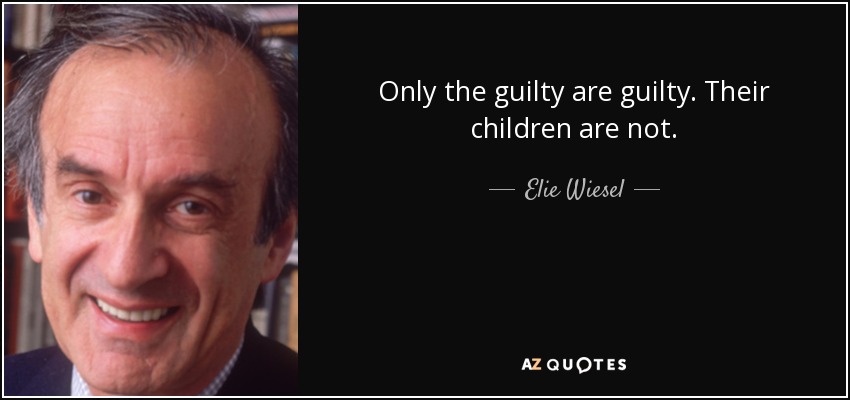
On this, the day after Elie Wiesel's death, this is an important quote to meditate on. Because while he wrote it concerning fascism and the death of Jews and others in Germany, it can also be justly said by those of us who believe that the arguments for apologies to be made on behalf of white people to others--notably black and brown people, red people, even other white people in some instances--are correct and that the apologies must be made. (Even those of us, like me, who believe that reparations are also necessary.) Because it is not that the children and grandchildren and great-grandchildren of slave owners, or drafters of Indian reservations or hangers of "No Mexicans" or "No Jews" or any number of other signs against someone else, are guilty of the transgressions of our parents. In all, there were relatively few of them (for instance, in the 1860 census of the 31M people in the US, only 394,000, a little over 1%, were slaveholders); however, that small number, due to public agreement with their values, had an incredible influence over laws and behavior. As a result, we are the beneficiaries of their values, just as if they had left us money or land. Because we benefit from their behavior, we are responsible for correcting the inequities of their behavior, just as we would be if they owed taxes on that money or land. We were not tax scofflaws or slave owners, but we received the gains, and we have to make their errors right.

Thursday, June 30, 2016

258 candles-day 126

I've been wracking my brain trying to think of what I can say that will mean anything to anyone about the current dismal, distressing state of politics in this country. And I've come to realize this: There isn't anything I can say. But there is something I can do.

My solution, based on the Chinese proverb that it's better to light a candle than to curse the darkness, is to provide daily candles in the form of links to other people's solutions, simple or complex responses to problems that they see. But as a single candle will hardly provide enough illumination to blot out the darkness that is the pettiness and meanness that characterizes this election cycle, I will light 258 candles, one each day between now and election day. In this way, I will do my part to remind each of us we are better than the baseness of the bases.

Today: I might have chosen a few other examples--the West African Muslims and Christians who protected each other's congregations on holy days, the spontaneous response by airline passengers to a grandmother's grief, or even my own denomination's Standing on the Side of Love--but this is a good beginning. 

Tuesday, May 3, 2016

258 candles-day 61

I've been wracking my brain trying to think of what I can say that will mean anything to anyone about the current dismal, distressing state of politics in this country. And I've come to realize this: There isn't anything I can say. But there is something I can do.

My solution, based on the Chinese proverb that it's better to light a candle than to curse the darkness, is to provide daily candles in the form of links to other people's solutions, simple or complex responses to problems that they see. But as a single candle will hardly provide enough illumination to blot out the darkness that is the pettiness and meanness that characterizes this election cycle, I will light 258 candles, one each day between now and election day. In this way, I will do my part to remind each of us we are better than the baseness of the bases.

Today: See a movie.

Sunday, April 24, 2016

258 candles-day 57

I've been wracking my brain trying to think of what I can say that will mean anything to anyone about the current dismal, distressing state of politics in this country. And I've come to realize this: There isn't anything I can say. But there is something I can do.

My solution, based on the Chinese proverb that it's better to light a candle than to curse the darkness, is to provide daily candles in the form of links to other people's solutions, simple or complex responses to problems that they see. But as a single candle will hardly provide enough illumination to blot out the darkness that is the pettiness and meanness that characterizes this election cycle, I will light 258 candles, one each day between now and election day. In this way, I will do my part to remind each of us we are better than the baseness of the bases.

Today: Using data and technology to determine where anti-poverty work is most needed.

Wednesday, March 2, 2016

258 candles-day 9

I've been wracking my brain trying to think of what I can say that will mean anything to anyone about the current dismal, distressing state of politics in this country. And I've come to realize this: There isn't anything I can say. But there is something I can do.

My solution, based on the Chinese proverb that it's better to light a candle than to curse the darkness, is to provide daily candles in the form of links to other people's solutions, simple or complex responses to problems that they see. But as a single candle will hardly provide enough illumination to blot out the darkness that is the pettiness and meanness that characterizes this election cycle, I will light 258 candles, one each day between now and election day. In this way, I will do my part to remind each of us we are better than the baseness of the bases.

Today: Africa's Great Green Wall.

Monday, December 1, 2014

no one should still be protesting this shit

Guys I knew in high school have posted links on Facebook, from notes of solidarity with soon-to-be-former Officer Darren Wilson to strenuous denunciations of the Ferguson black community and Michael Brown and his family. I've responded to many of them, sometimes letting my frustration and anger show. I would love to simply sit back and let their remarks flow over me like it is water and I am a duck' s ass. But as I pointed out, that is the definition of privilege. And I am prodded by the words of Desmond Tutu, that if we try to be neutral in the face of oppression then we have joined the side of the oppressors.

What galls me, not only in relation to the arguments they've put forward, but about similar arguments that regressives as a group have parroted, is the idea, as if it has never occurred to them, that what they accuse Michael Brown-and it is severely fucked up that anyone would use that term, willfully blind to the notion a killed black kid should be accused of participating in his own death-of doing is exactly the same as many of them have themselves done in the past, or have known people who have done similar things. No one deserves to be shot for having stolen from a store. No one who is unarmed deserves to be shot for charging a cop who is hundreds of feet away. (And despite the claims of Fox News, neither question is settled.)

If there is a people in America who should least have to protest against still having to protest this shit, it should be black people. Yet we are here, over two centuries after a revolution declared all Americans free, a century and a half after the last slave-bearing ship entered an American port, after a destructive Civil War, nearly five decades after passage of acts devoted to reconciling civil rights, and nearly a decade after a majority of Americans elected and then reelected a half black man with a funny name, still, still, protesting this shit. I like to think the sons and daughters of these guys with whom I've been arguing will not have to hold a similar sign or have similar arguments, but I am learning that hope, in addition to being feathered, may also be vain.

Tuesday, April 8, 2014

“We are assuring you, it will never happen again”


Yesterday was the twentieth anniversary of what is surely among the most important genocidal acts of my lifetime: the attempt to eradicate as many members of the Tutsi population in Rwanda (and sympathetic Hutus, it must be remembered). Below is an essay I wrote nearly a decade ago both as a commemoration of the anniversary and as an example of one kind of research essay for my classes. There are many posts reflecting the acts beginning April 7, 1994, on the internet this week; this one is about the attempt to bring a sense of justice in a particularly Rwandan way.


Abstract:  The Rwandan practice of Gacaca—a process of public confession done before a town’s residents—is helping to quicken the pace of judicial procedures instituted in response to the 1994 Rwandan genocidal massacres.           

 
“We will Never Do It Again!”:

Rwandan Gacaca

 
On February 19, 2003—just a few months shy of the ninth anniversary of the April 1994 airplane crash killing President Juvenal Habyaramana and setting into motion the infamous 100-day genocidal attack on Rwandan ethnic Tutsis—“Judges at the UN International Criminal Tribunal for Rwanda...unanimously pronounced former Seventh day Adventist pastor Elizaphan Ntakirutimana and his son[,] medical doctor Gerard Ntakirutimana[,] guilty of genocide” (Fondation Hirondelle, 2003) for their roles in specific killings at Mugonero and Busasero.   They are sentenced to ten years and twenty-five years, respectively.  The Ntakirutimanas are the highest-profile defendants of the ICTR trials, and their unanimous convictions provide testament to the difficult work done by ICTR prosecutors.

            The work has been difficult, but the eleven-month trial, the speediest of the ten decisions the ICTR has accomplished since its 1995 inception, and of which there remain another forty-five, leaves observers optimistic.  After all, the Ntakirutimana’s defense relied primarily on two easy-to-prove points:  that neither defendant was anywhere in the vicinity during the massacres in which they supposedly participated; and in any case, neither actually swung a machete, the preferred method of execution during the massacre.

            Neither fact, however, mattered.  Their guilt was moral rather than physical.  Pastor Ntaki (the familiar patronymic among Rwandans), a Hutu, had received this letter, dated April 15, 1994, from several Tutsi pastors under his leadership:

How are you!  We wish you to be strong in all these problems we are facing.  We wish to inform you that we have heard that tomorrow we will be killed with our families.  We therefore request you to intervene on our behalf and talk with the [mayor].  We believe that, with the help of God who entrusted you the leadership of this flock, which is going to be destroyed, your intervention will be highly appreciated…We give honor to you.  (Gourevitch, 1998, p. 42)


            Pastor Ntaki did indeed intervene with the mayor.  The result is described by Philip Gourevitch.

In Nyarubuye, when Tutsis asked the Hutu Power mayor how they might be spared [after the extermination had begun the previous week in Kigali], he suggested that they seek sanctuary at the church.  They did, and a few days later the mayor came to kill them.  He came at the head of a pack of soldiers, policemen, militiamen, and villagers; he gave out arms and orders to complete the job well.  No more was required of the mayor, but he also was said to have killed a few Tutsis himself.

The killers killed all day…At night they cut the Achilles tendons of survivors and went off to feast behind the church, roasting cattle looted from their victims in big fires, and drinking beer…And, in the morning, still drunk after whatever sleep they could find beneath the cries of their prey, the killers at Nyarubuye went back and killed again.  Day after day, minute to minute, Tutsi by Tutsi:  all across Rwanda, they worked like that.  “It was a process,” Sergeant Francis said.  (Gourevitch, pp 18-19)


            These victims were the neighbors and friends of their murderers.  Something very strange went on in Rwanda during those months.  And something no less strange occurs in its aftermath.

            One thing that must be understood about the Rwandan massacres is that they did not happen either in a vacuum or in secret.  The murderers, minority ethnic Hutus, members of the same tribe with which President Habyaramana, himself a Hutu, had stocked his government, were well-prepared, armed and trained for months prior to the genocide, and informed of the attack’s timing and pressed on by Radio Mille Collines, Rwanda’s nationally-owned radio station.  There were also a lot of them.  The fifty-five current cases before the ICTR are but a tiny fraction of the 2500 “Category One” killers, described by Samantha Powers (2003) as genocide planners, “well-known” murderers, or defendants who killed with “zeal” or “excessive wickedness”.  Another 120,000 Rwandans await conviction on lesser charges.  It is estimated there were 800,000 individual murders of ethnic Tutsis and moderate Hutus during that one hundred days, and there are many, many categories besides Category One.

            The ICTR obviously cannot try each case, nor is it designed to try, a la Nuremburg, a specific class of cases.  Eventually, each case is meant to arrive in Rwanda’s regular court.  Helping them get there is a specifically Rwandan process called gacaca.

            Gacaca (pronounced ga-CHA-CHA and so-named “for the leaves of grass on which traditional leaders sat while they resolved community disputes” [Powers, p 48]) is a once-a-week judicial procedure attended by the rescapés, or Tutsi and Hutu survivors of the massacres.  Inaugurated in 1999 by Rwandan president Paul Kagame in an attempt to lessen the strain on the country’s prisons into which suspects had been crammed since mid-1994, gacaca is “a public confessional process that recalls both the Salem witch trials and a Mississippi Christian revival” (Powers, p 48).  Powers describes one such gacaca she witnessed in Niyikazu, Butare:

            One group of prisoners arrived on foot, dressed like other villagers in worn blue jeans and smudged Nike T-shirts, African sarongs, and an assortment of flip-flops, loafers, and bedroom slippers…They were hauling stools and benches, on which their fellow townspeople sat during the day of exhausting testimony.  Although there was hardly any supervision, none of the prisoners tried to make a dash for the hills.  The local prison chief explained, “It is not in our culture for people to try to escape.”

            A second group of prisoners arrived dressed in pink prison uniforms…Some of the prisoners has starched their shirts for the big day.  All seemed giddy, enjoying the change of scenery and the first hope in seven years of eventual release.

            …[A] handful of prisoners in the jail’s musical troupe made their way into the center of the courtyard, which was by now ringed by more than a thousand onlookers.  One prisoner played the bongo drums and four strummed guitars, several of which had been painted pink to match their prison uniforms.  The musicians…were joined by prison singers, who danced to a rhythmic song about murder, confession, truth, liberation, and reconciliation.  The beat was catchy, combining reggae, polka, and gospel singing…When the song reached its final stanza—“We are assuring you, it will never happen again”—the three prison dancers twirled around and  swished their hips to the tune, all the while making a throat-slitting motion, and wagging their fingers to indicate admonition.  “We will never do it again!” (p 49)


            This seems the stuff of satire, ripe for mockery, but the truth lies in that phrase delivered by the unnamed prison chief:  “It is not in our culture for people to try to escape.”  These people had done terrible deeds and it has become in their best interests to confess them because they have nowhere else to go.  Those who, after the return and victory of the Rwandese Patriotic Front from Uganda, decamped to Tanzania or Congo or Zaire to escape vengeance, have, for the most part, returned.  The number of former murderers living in close proximity to their former victims is of course a sore point—Gourevitch ends his book with the story of Jean Girumuhatse, a returnee from Zaire who had run a roadblock and who admitted to killing at least six people, and his request of Laurencie Nyirabeza, a rescapé whose family he killed and a woman who he himself struck with a machete, for her “pardon”—however, as President Kagame has said, “We have no alternative.” 

            Gourevitch’s tale ends as Girumuhatse describes the genocide as “like a dream.” 

“It came from the regime like a nightmare.”  Now, it seemed, he had not so much waked up as entered a new dream, in which his confession and his pat enthusiasm for Rwanda’s reform—“The new regime is quite good.  There are no dead…There is a new order”—did not require any fundamental change of politics or heart.  He remained a middleman, aspiring to be a model citizen and to reap the rewards.  When the authorities said kill, he killed, and when the authorities said confess, he confessed.  (Gourevitch, pp 310-11)


            This, it would seem, is the particular advantage of the gacaca:  that one who needs to confess will do so, and be sent further along the chain to ultimate responsibility,  while one who has nothing to confess will be absolved.  Of the 8000 prisoners presented at gacaca, nearly 2000 have been freed, not on technicalities but on the say-so of their neighbors.  Such a system is unlikely to work in the US—we are more a nation of Pastor Ntakis, who loudly declares, if not his innocence, then his lack of responsibility for the consequences of his actions—but gacaca seems a uniquely effective Rwandan solution to a uniquely Rwandan problem.


BIBLIOGRAPHY

Works Cited in this Essay:


Fondation Hirondelle.  (2003, February 19.)  Elizaphan Ntakirutimana.  Retrieved March

1, 2003.  http://www.hirondelle.org/hirondelle.nsf/caefd9edd48f5826c12564 cf00 4 f793d/b327fbfdb8707d83c12567cb003390c8?OpenDocument

Gourevitch, Philip.  (1998.)  We Wish to Inform You that Tomorrow We will be Killed

            With our Families.  New York:  Farrar Strauss Giroux.

Powers, Samantha.  (2003, January 16.)  Rwanda:  The Two Faces of Justice.  The New

            York Review of Books, pp 47-50.


Sunday, March 16, 2014

what the sun said

To help me deal with this winter, I've been reading several books that lie for at least part of their narrative on extremes of weather, whether cold or heat or rain or whatever it might be. One of these books is a science fiction novel from the mid-90s called Evolution's Shore.

It takes place in the early 2000s, specifically 2008, six years after Saturn's moons are observed winking out of view. A year later a meteor strikes Mt Kilimanjaro and immediately grows a vegetation no one can identify but that serves to fully cover the mountain and grow at an exponential rate. It immerses everything within in and nothing that enters returns.

So it's said. There is one person who has left. Peter Werther is an early victim of the meteor, a member of a hang-gliding group that was thought decimated by the landing. It turns out, however, that the vegetation, which has come to be called The Chaga (named perhaps for the ubiquitous chaga mushroom?), had kept him alive in a manner of speaking for five years before expelling him. Gaby McAslan is a reporter for SkyNet (based on BSkyB rather than on the developer of the Terminators) who has been put into contact with Werther and has come to hear his story.

But what has struck me best and is the reason I am transcribing some of McDonald's novel here, is that the group Werther has been staying with since his "release" are called the New Millennium Travellers and are a perfect complement to what the Rainbow Family can become in an international manner. Werther's reason for being with them, too, resonates clearly with me.
The Travellers' camp was only a few miles beyond...,down a long dirt road that turned off the track to the Safariland Lodge and meandered along the shore of Lake Naivasha. Their wagons were pitched in the shelter of a stand of flame trees. Some were propped up on cinder blocks, wheels removed, a final surrender to the fuel shortages. There would never migrate along the world lines again. A beautiful hand-painted wooden sign stood over the entrance to the settlement. WHAT THE SUN SAID was its name.
What the sun said was dust. What the sun said was flies. The sun said heat. The sun said melanomas.
Tents and awnings billowed limply in the slow, hot air. Wind chimes set on ornamental door-posts barely tinkled. Japanese fish kites hung open-mouthed, stirring their streamer tails. Stranger fruit hung from the branches of the flame trees: things like cracked leather cocoons bound with steel wire. There were three of them, each about five feet long. They turned slowly anticlockwise to Coriolis force. A long generator chugged, most of the camp's power came from silent solar panels. All the vans had small steerable dishes on their roofs: the economics of techno-nomadism was that the information revolution had made it not only a desirable lifestyle, but a necessary one. You followed the sun and lived the lifestyle in harmony with the planet until one day the fuel ran out and left you stranded in the heat and drought of Africa's Rift Valley. With the Chaga approaching.
The Kilimanjaro Event had made East Africa the social navel of the planet. International Bright and Beautiful, and those who clung around them hoping that brightness and beauty were contagious, followed the planetary media circus to the plains in the shadows of the mountains. Most had moved on when Africa and things African slipped out of fashion. Some remained. They found room for their humanity to resonate in Africa's great spaces. They made their camps under the big sky and settled into sun-warmed introversion and the evolution of white-boy ethnicity. The men of What the Sun Said were bearded and sat about with their hands dangling loosely over their knees, watching what was watchable. The women, naked to the navel, carried their babies slung at their waists and intimidated Gaby with the firm upturn of their breasts. Children in beads, feathers and zinc oxide war paint on noses and cheekbones came running to greet the visitors. Their skins were tanned hard brown, there were flies around the corners of their eyes and mouths.
"Are you the people come to talk to Peter?" they asked. "We're here to take you to him. Come on." They pulled Gaby...along...In one of the big, billowing saffron tents, someone was playing a thumb piano...
This was what a man come back from the heart of darkness looked like. His face was tanned that dark brown peculiar to Teutons gone native. His hair was blond, long and worn in the community style; shaved at the sides, plaited at the back...He had the palest eyebrows she had ever seen. He did not effect the white-boy ethnic chic of the Sun-Saiders. He was dressed in a relaxed linen suit over a simple white T-shirt. No jewelry. No tattoos or ritual scarification or body piercing. His only idiosyncrasy was a leather biker's glove on his left hand...A swirl of warm wind set the black pods hanging from the trees swaying into Gaby's peripheral vision.
"They are into rebirthing," Peter Werther said, observing Gaby's distraction. "Spiritual metamorphosis."
"There are people in those things?"
"In sensory deprivation. They let them out after three, four days. The thing seems to be that they don't tell you how long they are going to leave you hanging, or even if they are going to come back at all. Face the fear and pass through is the experience. I think that after three days upside down in this heat, you will believe anything you are told about yourself. There are always willing volunteers, and not just from the community."
...[Peter Werther continued,] "I am sure you are wondering, why this place, why these strange people with their strange rituals? Well, they are a good people, it is a good life they lead, but the real reason is simpler. They were the first people I met when I came out of the Chaga. I walked, you see. I was brought to the edge, and told I must leave now, and I just walked north. They do not ask questions, you see. They accept...[These] people, in their months of travel, gave me the time and space to learn about myself, and what I have been changed into, and what it is I must do. And now I think I know, and I am ready, and these people have let me bring you into their peace and calm because they agree with me that the world needs to hear what I learned, back there."

Wednesday, November 6, 2013

when god was a little girl

This is quickly becoming a week of Africa-themed posts. Since yesterday's posting about the lyrics for "Preserve Uganda's Future Hope" (which I retitled "Uganda, the Beautiful"), I've come across David Weiss' project for a book called When God was a Little Girl.

It's not a new idea, the femininity of the devine, the matrilineal deity, because truth be told the confluence of the feminine with creation is probably among the first theological thoughts. And as a pantheistic panentheist, it's one I could certainly be comfortable with. One of the most important words David used in his lyrics is the replacement of kin-dom for the more traditional kingdom. This exchange is old hat for many of us already versed in liberal religion, a de rigeur example of inclusive language. But the notion, despite biblical precedent, can be heretical for others more closely invested in patriarchal terminology.

What if, rather than a patrilineal deity, we acknowleded one that was maternal or, more to the point, one that was absolutely sexless or both sexes? A hermaphroditic god is hardly new either, and certainly if we can accept it in clown fish, snails and flowers, we can accept it in our god. Plato may have been onto something in his concept of the origins of love Aristophenes forwards in his Symposium.

But more importantly, what if we rid ourselves of the notion of a hierarchical god altogether, a god that is part of a kin-dom, with all its resultant relational focus intact, rather than a king- or queendom that relies on a higher order of anything? What if we accepted a horitzontal god rather than a vertical one? A god that is not only open to peer-relationship with reality but is co-created as reality expands. Traditionalists might argue against this idea as it can't exist with a reality that is itself created by god, but that only depends on the acceptance that creation is finished, and I just don't think that's true. That revelation is not sealed is a tenet of Unitarianism. We accept the expansion of the universe. Why not the expansion of reality? There's a legitimate argument to be made, I think, that what I'm really describing is the expansion of our knowledge, that I'm guilty of confusing what is with what we understand. But I'm willing to conflate the two, recognizing as well that god's masculinity and vertical ordering of reality is based on information collected a couple thousand years ago.

Tuesday, November 5, 2013

uganda, the beautiful

These are the lyrics written by David Weiss who is hosting Reverend Mark Kiyimba (for whose chapel service I rewrote a couple African prayers). We sang it today as a group at chapel. It's sung to the tune of "America, the Beautiful."

Beneath these bright and gracious skies, where hope is freely lent,
Yet children watch through vacant eyes, as families are rent.
Be merciful, bring justice now, O hear our urgent plea:
Preserve Uganda's future hope, and set her people free.

By missionary zeal first sown, as hearts for Christ were claimed,
But now against its flesh and bone, is hatred thus inflamed.
Be merciful, bring justice now, O hear our urgent plea:
Preserve Uganda's future hope, and set her people free.

O gracious God, take back your word, from preachers on our shores
Whose lust for blood goes undeterred, and on your children pours.
Be merciful, bring justice now, O hear our urgent plea:
Preserve Uganda's future hope, and set her people free.

In Africa, your soul delights, so make her leaders brave,
And guide the path toward human rights and all your children save.
Be merciful, bring justice now, O hear our urgent plea:
Preserve Uganda's future hope, and set her people free.

At last may dawn the day we seek, where love has naught to fear
And every lover truth may speak, and find your kin-dom near.
Be merciful, bring justice now, O hear our urgent plea:
Preserve Uganda's future hope, and set her people free.

David has called it "Preserve Uganda's Future Hope," which is very ungainly, so I'm retitling it here simply as "Uganda, the Beautiful." I'm rarely touched by songs like this, I admit, probably because I have an aversion to recycling familiar songs in order to get across a message that might be opposite to the original intent ("Forward Through the Ages" for "Onward, Christian Soldiers" is one of the few I really appreciate), but I felt moved by our singing and while that may have been partly because the lyricist was in attendance I suspect it was also because the lyrics were appropriate to Mark's message about acceptance of diversity and the difficulty of preaching it in Uganda. I experienced a thrill of being someplace something important was happening.